CHULSOO KIMComposer · Pianist · Interdisciplinary Artist
KO / EN
← All performances

YOUNGGAM 08 · 2023

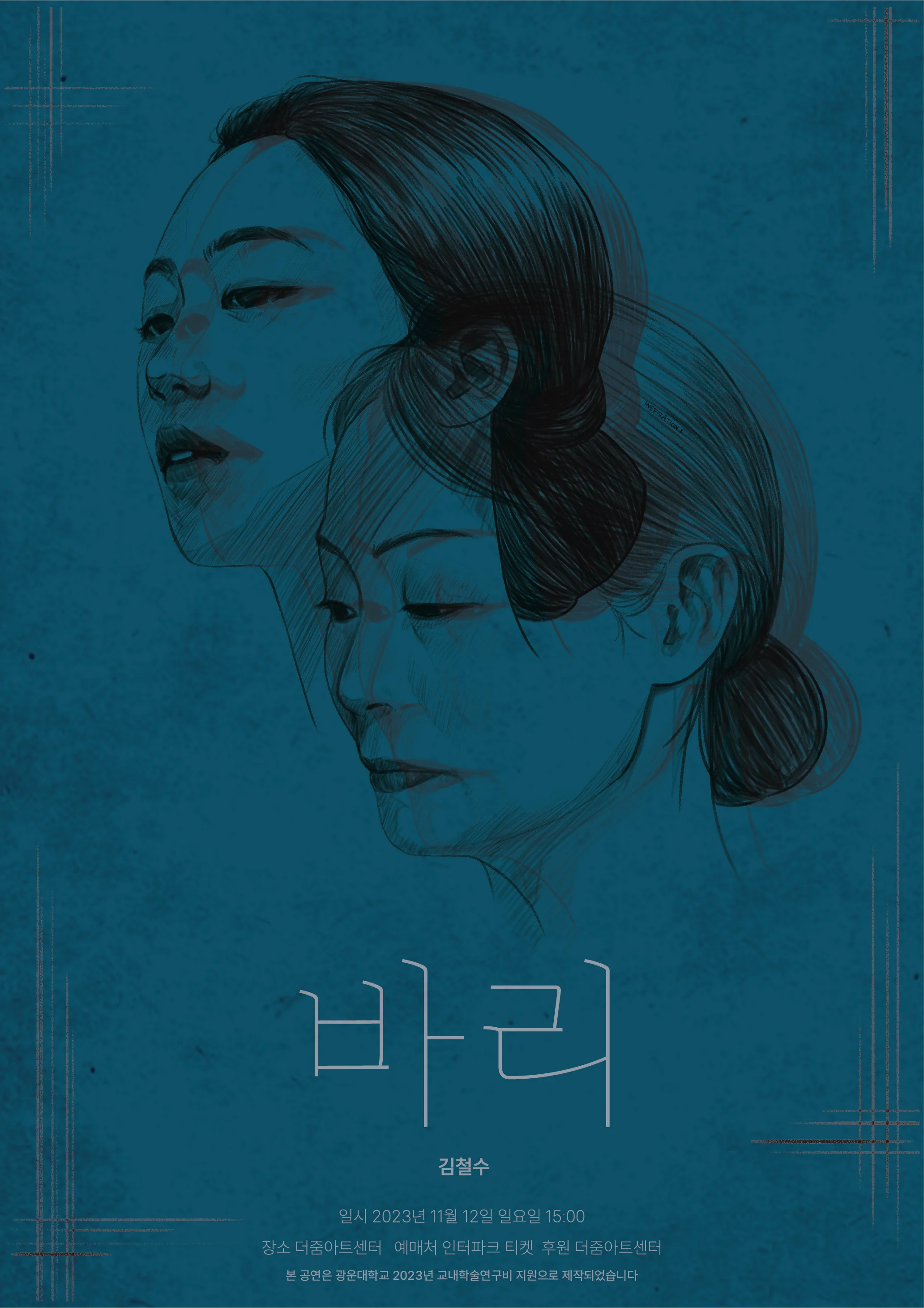
BARI

Bari official poster

Overview

YOUNGGAM 08 — BARI · 2023

A work exploring overlapping lives and recurring karma, illuminating the many Baris around us through writing, dance and music.

Story

1. Ringing in My Ears

‘It is stage three. We can see that it has spread to the lymph nodes. But with proper treatment, you can get through it. Keep up your strength during chemotherapy. I will do everything I can, too. Stay strong!’ Suddenly, I heard a high-pitched ringing. I could hear nothing else. Just that ringing. From that day on, I was troubled by tinnitus. I had been pleased to lose so much weight lately, but cancer cells had been growing inside me. How foolish I had been, happy that my waist was smaller without even knowing I was ill. I thought I was detached from life. ‘It has been a hard life; what difference does it make whether I go today or tomorrow?’ Yet faced with death, I am frightened. Worried, too... My daughter will be so sad if I die, and I am sorry. I am sorry to Suhee, too. Poor Osuhee. My name, the name people never really called me by.

2. My Name Is Osuhee

‘Su for outstanding, hee for joy.’ My name is Suhee. But people called me Bari. Oh. Ba. Ri. I hated it, but never showed it. Why? I should have said at least once that I did not like it... I am told that when I was born, my father said to throw me away. He already had five daughters in a row. When he learned that I, the sixth, was another girl, he flew into a rage, saying more daughters were useless and that I should be discarded. My mother and sisters cried and pleaded, so I was not abandoned, but for a while I had no name and was called Barinae, the discarded child. Then, at some point, people began calling me Obari. Obari, as in obaltan, a stray bullet... When I was three, a boy was finally born into our family. On the day he registered my younger brother Suchan, my father was so happy that he registered my name, too. Outstanding joy. Osuhee.

3. What If I Had Dreamed?

My father died suddenly when I was fourteen, in 1973. That year alone, five adults in our village were swept away by waves. He was one of them. After his death, my mother filled her heart with alcohol and tears, as though she had given up on life. All seven of us were frightened. At the end of that year, my eldest sister said she could no longer stand our mother. She met an American soldier, married him, and left for America. With two of the grown-ups suddenly gone, we needed someone to lead the family. Someone had to pull themselves together and keep us going, but we were all young. I had to find something I could do. That was how I came to hold wigs instead of books and pencils, in a factory instead of a classroom.

4. Together in Harmony

‘Mom! Don't get married again like that lady. Let's just live happily together like this—you, me, and Grandma!’ Not long before, a colleague had introduced me to a man, and we had met a few times. He seemed kind and capable of making a living, and above all I could see that he liked me. Just as I was thinking about a life with him, those words from my eleven-year-old daughter, watching a television drama, made me jump as though I had been caught stealing food from a feast. I had often wondered whether it was right to keep living with my husband's family when he was no longer there. But this little girl was loved by her grandmother, uncles, and aunts. Would it be right to take that away just so I could live my own life? ‘Yes. I'm sorry, my girl. Your mom must have lost her mind for a moment. Let's all live happily together like this.’

5. On the Other End of the Phone

‘Hello? Mom, what are you doing?’ ‘Hm? Oh... I'm on my way somewhere. Let's talk later. I have to go, sorry.’ ‘Wait! It's nighttime. Where are you going at this hour? Don't tell me you're going to Auntie's again. Leave her alone. Don't go. Your family is you and me, Mom! Please stop getting involved!’ ‘All right... I'm sorry... We'll talk later...’

My fifth sister, the Buddhist nun Heoyeon, would sometimes joke that an alcohol demon lived in our family. My mother, my second sister's husband, my fourth sister, my youngest brother—ever since before I married, they had all lived as though submerged in drink. I had married almost as if to escape, but I could not get out of that demon's grasp. When the phone rings at night and I hear my drunken relatives on the other end, I find myself rushing to them. It feels as though something terrible will happen if I do not go... My daughter does everything she can to stop me, but I cannot help it. They are still my family... They say they are suffering so much... I cannot simply leave them to die...

‘I'm sorry, my girl.’

6. My Poor Sister

‘Bari! Bari!’ ‘Hello? Is that you? What's wrong? Stop crying and tell me! Please?’ ‘Bari, Bari, what am I going to do? Oh, Bari...’ ‘Pull yourself together and tell me! What's wrong?’

My second sister had spent her life in a single room with our mother, her husband, and their two daughters. When her husband caused trouble or her children fell and hurt themselves, she always called me. This time, our mother had collapsed. I called 119, caught a taxi, and rushed to the hospital. My sister was crying, white with fear. After finally calming her down, I asked:

‘Why did you call me instead of calling 119 straightaway? The doctor said it could have been serious if there had been any more delay. Why?’ ‘I don't know, Bari. I'm no good at things like that, but you're good at everything. You were simply the first person I thought of.’

7. Mother's Inheritance

After about three months in hospital, my mother closed her eyes in her hospital bed one autumn day when the leaves had turned red. Relatively peacefully, in front of all of us except my eldest sister, whom we had lost touch with since she went to America, and our youngest brother Suchan... My second sister, who had lived with our mother all her life, called almost every day for a while, half frightened and half worried, saying Mother appeared in her dreams each night. My third and fourth sisters also kept apologizing for not contributing to the hospital bills whenever we met. Paying those bills was no great thing. It was fortunate that someone could. When she died, Mother revealed property none of us had known about: a small plot of land belonging to her family in Songchu, Gyeonggi Province. She said it was Suchan's. Even during all those years of poverty, she must have wanted to pass that land intact to her son, judging by how carefully she had hidden it from us... Mother left something for me, too. Holding my hand tightly—not any of my sisters' hands—she left me just a few words.

‘You worked so hard.’

Sorrow, hurt, relief, and other feelings I cannot quite name came flooding in with my tears.

8. If I Could Go Back

There are no regrets. It was my fate; there was nothing I could do. It was the best choice. Even so, I think the Suhee of those days was terribly pitiful. If I could meet her then... what could I tell her?
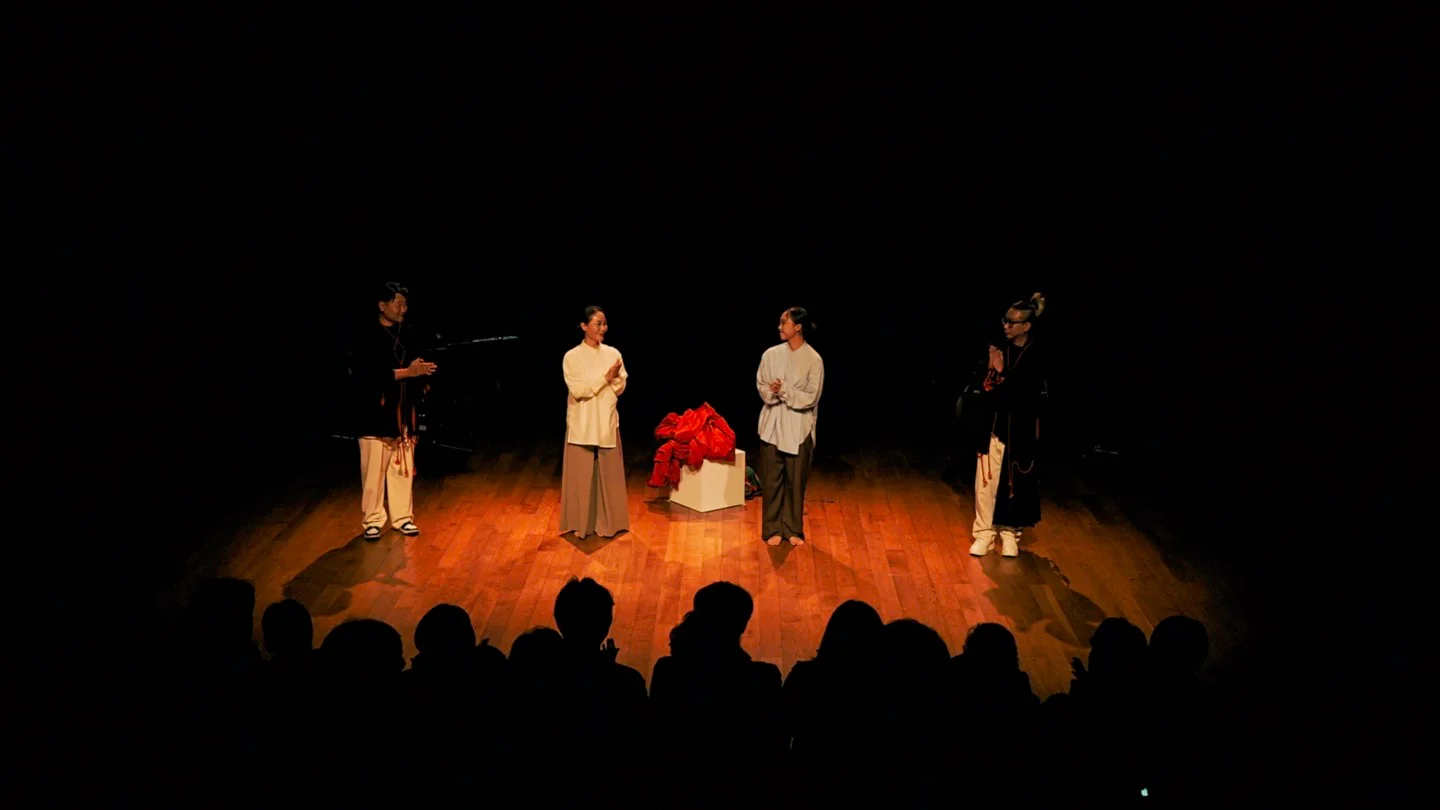
Characters & scenes

Bari (Osuhee)

- Born in 1960 as the sixth daughter of Oguyeong and Gildaenam. - Her father wanted a son; instead of being called by her name, she became Obari (Bari). - Married into a family of six siblings as the eldest daughter-in-law. - Had to live for others in her husband's family as well. - Develops breast cancer and begins looking back on her life.

Oguyeong

- Bari's father. - Works in fishing in Tongyeong; his family has owned extensive fishing grounds for generations. - Wants a son to carry on the family line and has seven children before a son is born. - The first daughter brings disappointment, the second disillusionment, the third and fourth anger, the fifth despair, the sixth madness, and the seventh child—a son—obsession. - Dies in an accident at sea when Bari is fourteen (1973).

Gildaenam

- Bari's mother. - Feels inferior because she has borne daughters one after another. Named Daenam because she was born in place of a son, she feels hurt and angry toward her own parents for favoring boys. - Saves Bari by pleading with Oguyeong when he orders their sixth child abandoned. - Favors her youngest son after his birth, but does not imagine her daughters might feel the same disappointment and anger toward their parents that she once did. - Despairs after her husband's death and gives up her role as a mother. - Loses Oguyeong's inheritance after being deceived by her second son-in-law. - Falls ill when Bari is in her forties and relies on her in old age. - Dies in Bari's arms but leaves all her remaining property to her son.

Eldest Sister — 1954

- Monopolized her parents' love until the youngest child was born. - Even Oguyeong could not bring himself to hate his eldest. - Feels hurt and angry at the change in her parents' attention after the youngest child's birth. - Detests sharing with her younger siblings and is spiteful. - Wants to leave home after seeing Gildaenam engulfed in alcohol and tears following Oguyeong's death. - Marries an American soldier she meets by chance in 1973 and emigrates to the United States. - Makes contact a few times early on, but cuts ties with her Korean family after giving birth in America. - Does not attend Gildaenam's funeral.

Second Sister — 1956

- Innocent and tender-hearted; has a daughter with a young lodger, a war veteran (aged twenty in 1975). - Lives passively, depending on her husband for everything. - Fearful and consumed by needless worries. - Constantly says, ‘Bari, what should I do?’ - Her husband has affairs and persuades her family to part with all its money, which he squanders; frustratingly, she still lives only for him. - Cannot take the initiative in nursing her bedridden mother, Gildaenam, and keeps relying on Bari, becoming a constant burden. - Bari always feels sorry for her. - When her husband has an affair, Bari seeks out and punishes his mistress.

Third Sister — 1957

- The fourth sister's identical twin. - Exceptionally beautiful and talented, with strong leanings toward entertainment. - Once adventurous and cheerful; develops severe depression when her husband's violence begins. - Marries a man connected to an entertainment agency and gives up her own dream of entering that world. - Her husband does not drink but beats her often. - He assaults her even in front of Bari, who rushes over after hearing about a fight. - Cannot divorce him because she has a daughter. - Her wealthy husband's family covers the second brother-in-law's financial trouble and then demands repayment from her. - As her depression worsens, she stops speaking, and her husband's family's demands pass to Bari.

Fourth Sister — 1957

- The third sister's identical twin. - Exceptionally beautiful and enterprising. - The sister closest to Bari in childhood. - Has dated since she was young; seeing her brothers-in-law, she comes to despise men and chooses to remain single. - Her looks, personality, and intelligence bring great success in business, but one bad investment leaves her penniless. - Unable to let go of her memories and spending habits from her wealthy years, she becomes dependent on alcohol amid the gulf between memory and reality. - Constantly calls Bari drunk to lament her life. - Cares for Bari when sober but causes her greater distress when drinking. - Eventually dies in a drunk-driving accident. - Leaves a hole in Bari's heart.

Fifth Sister — 1959 (Buddhist Nun Heoyeon, 虛緣)

- Leaves secular life early to become a Buddhist nun. - Does not involve herself in family affairs. - Always tries to comfort Bari by saying, ‘It is your fate, your karma.’ - Having never had a husband or children, she struggles to find common ground with Bari's pain.

Youngest Son (Osuchan) — 1962

- Handsome and intelligent. - Grows up lacking nothing. - Wants to escape the family after Oguyeong's death and Gildaenam's despair. - Emotionally weak, having never experienced a sense of achievement. - After the second brother-in-law ruins the family, turns to gambling in the hope of a sudden fortune. - Growing debt leads to alcohol dependence. - Takes money from Bari to gamble even while their mother is bedridden. - Gambles away the property inherited after Gildaenam's death. - Calls Bari when drunk, repeatedly apologizing and saying she suffers because of him. - A person Bari can neither hate nor cherish. - His good looks attract women, but he never marries.

Music & program

Overlapping Music

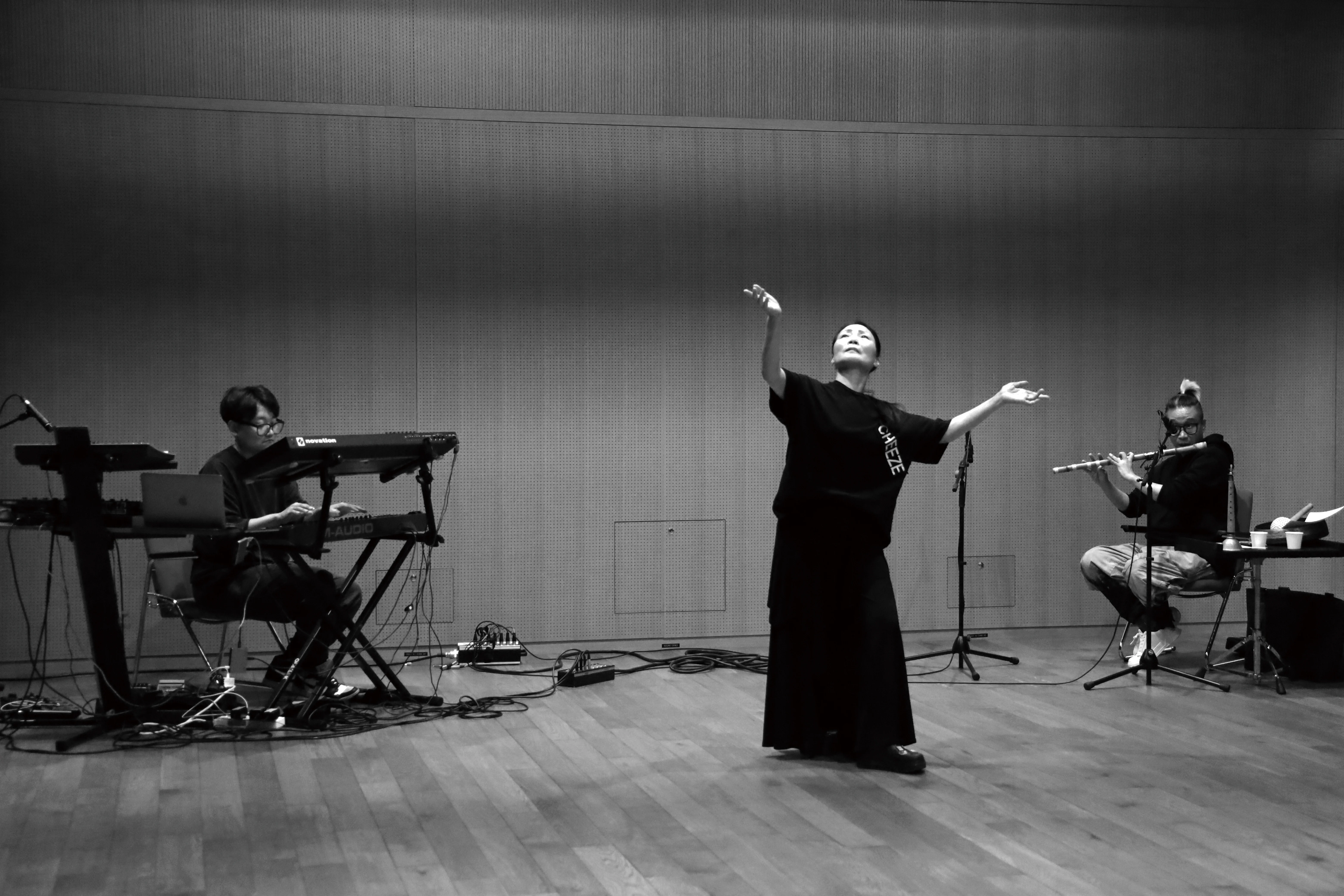
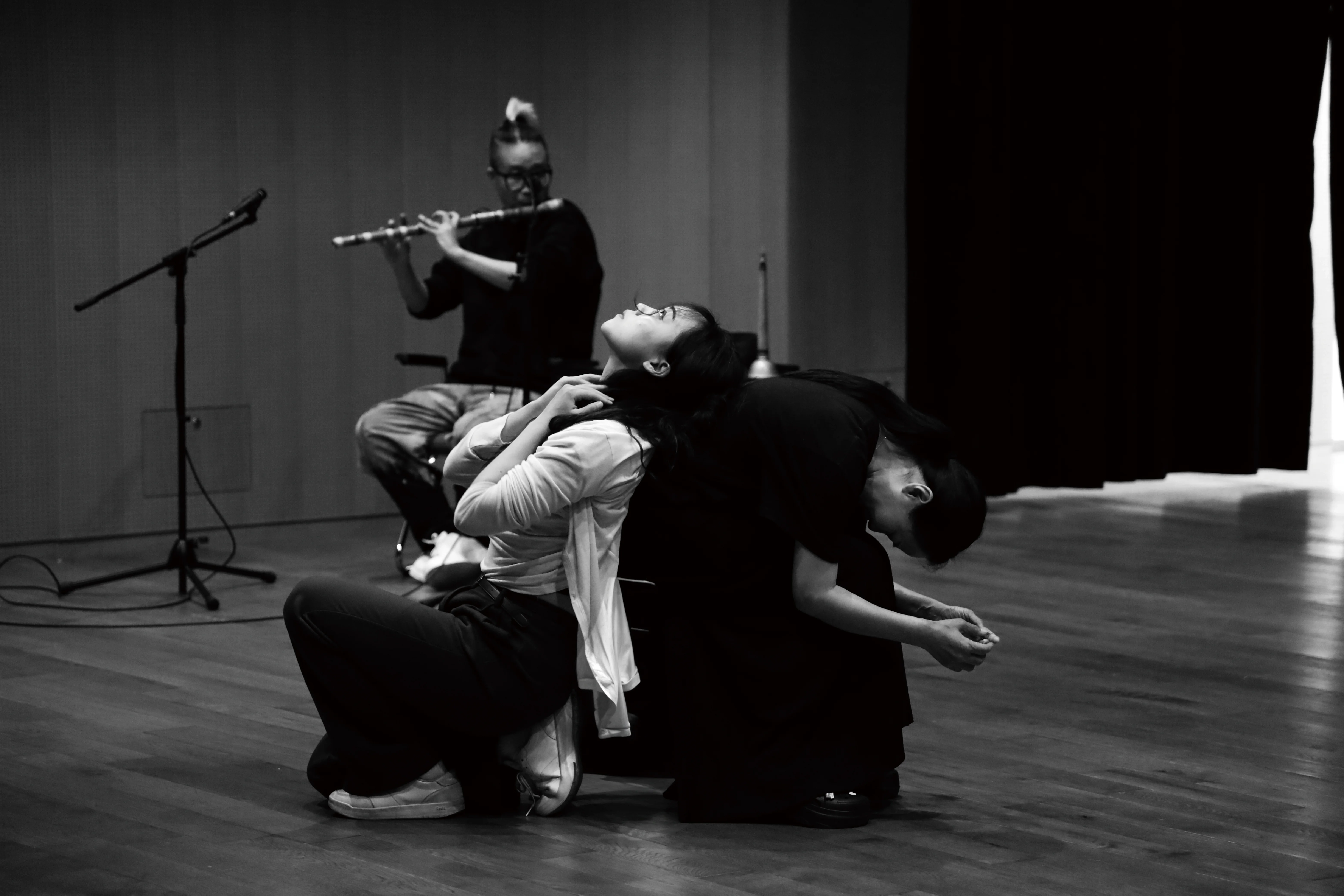
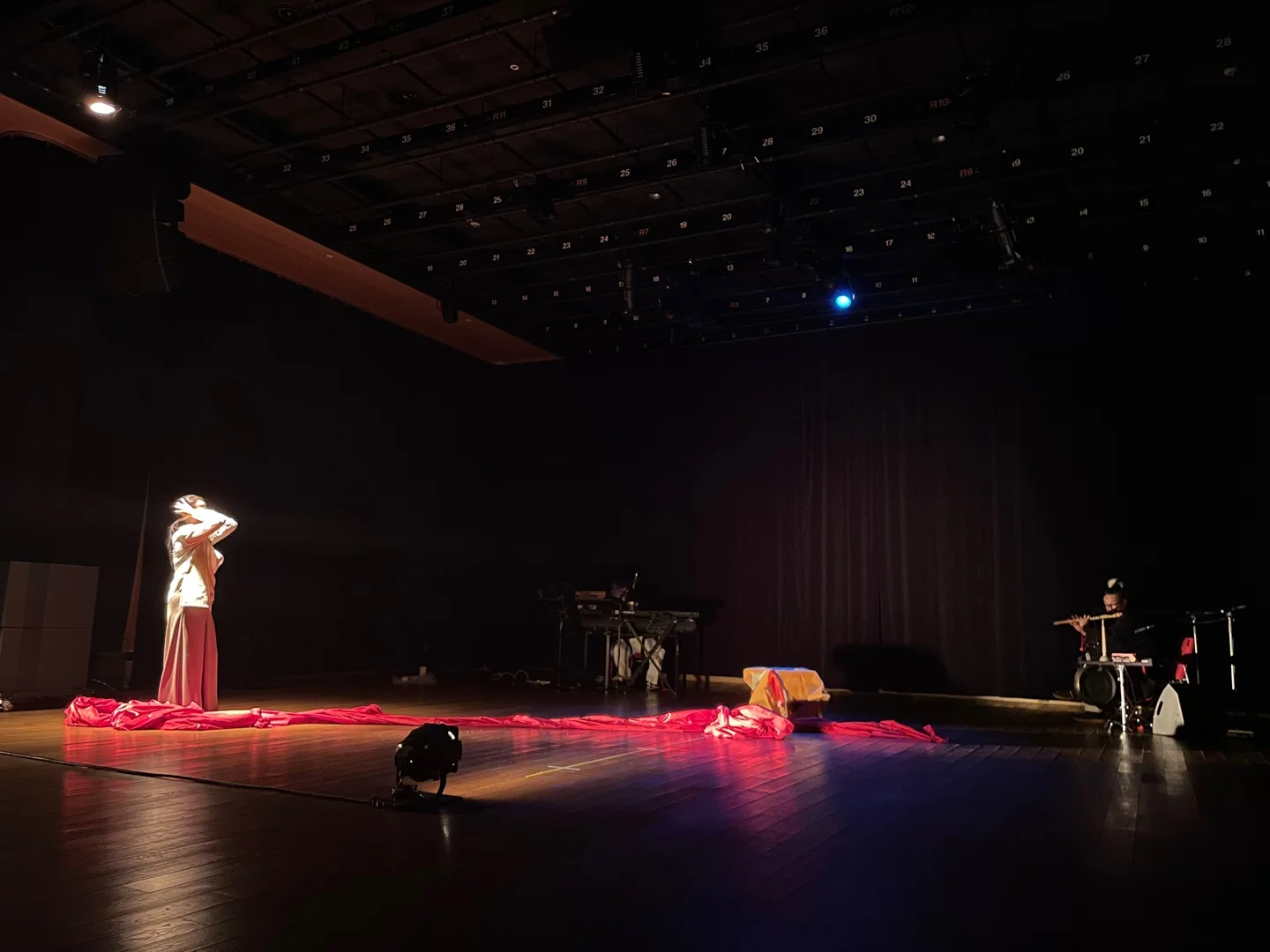
Overlapping lives and recurring karma were the central concerns of this performance. I thought the Baris portrayed by 정금희 and 변상아 could be the past and future of one woman, but could also be overlapping lives that are different yet similar. Through this overlapping, I wanted to illuminate the many Baris around us. The music, too, focuses on overlapping and repetition. The program comprises eight pieces arranged symmetrically around the fourth, 오순도순. The first and eighth borrow the melody of Cheongsin-ak, used to invite deities in Namhaean Byeolsingut. Cheongsin-ak is played at the beginning and end of each gut segment, or chapter. This matters because the performance invokes a gut ritual, but I also wanted to express endless repetition by placing the same melody at the beginning and end. The jwajong sound used in the first piece is used again in the eighth with its waveform reversed. If its sound is likened to a mirror, the eighth piece's jwajong becomes a device creating an endlessly repeating, overlapping world between mirrors. The synthesizers in the third and fifth pieces also express overlapping. In both, multiple layers of linear synthesizer melodies repeat, each with its own tempo and starting point. They suggest an overlapping of things that are similar but somehow different.

Artists

Kim Chulsoo — direction / musician

정금희 · 변상아 — dance / choreography

Full production credits will follow once verified.

Photos & video

Official performance video link pending

Records

Introduction CHULSOO KIM — director / musician

Music appeals directly to human emotion, but without lyrics it is extremely abstract compared with art perceived through the eyes, including written words. Understanding the world of abstraction can be quite uncomfortable.

One might say understanding is unnecessary, but my mind constantly wants to grasp the context of what it encounters, so I become preoccupied with finding stories or devices within the works I experience. Likewise, while making and playing abstract music, I feel a burden to convey a story or message to the audience in some form.

For this work, I decided to ease that burden by writing, refining, and concealing a plot myself. Sharing the burden of communication and storytelling with writing and dance allowed the music to become freer. It was a time to focus on sound and the structures in which sounds are arranged, beyond the melody, harmony, and rhythm of conventional approaches to music.

In the pages that follow, I would like to introduce the devices and intentions I developed while imagining the music, along with a more detailed account of the protagonist Bari's life.

Closing Words

BARI has a clear and detailed scenario for its protagonist's life, yet that story cannot be found anywhere onstage. Only the fragments of thought about Bari's life contained in the eight pieces will faintly guide the audience. I hope that, in a balance between ambiguity and freedom, audiences can feel her life and think of the many Baris around us.

Transferred from the original public Notion archive; English is a translation.

CHULSOO'S WORLD

Personal records kept separately from the public performance archive. An entrance notice appears before reading.

CHULSOO'S WORLD ↗